


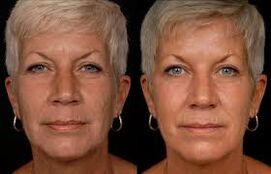
Smooth, soft skin and a radiant complexion are the first steps towards perfection.But stress, lack of sleep, imbalanced nutrition, solar radiation, wind, dust can have a negative impact on the condition of our skin.The aging process begins unconsciously: metabolic functions and cell division slow down, leading to loss of elasticity and the appearance of wrinkles.
Genetics are important, but beauty care plays an even more important role.In an effort to prolong youth and beauty, many women resort to innovative methods such as laser fractional skin rejuvenation.
Fractional skin rejuvenation is an advanced technology developed by Italian experts based on the effects of carbon dioxide laser.The laser penetrates deep into the skin, triggering the cell renewal process and the synthesis of new collagen, restoring skin elasticity and smoothness and eliminating pigmentation and wrinkles.
The scanning system allows the doctor to select different irradiation densities, producing "spot" radiation, thereby individually addressing various patient problems related to age-related skin changes: elimination of small and obvious expression wrinkles on the forehead, around the eyes, nasolabial folds, successful elimination of pigmented spots, acne marks, signs of acne or hyperkeratosis.
To enhance and "consolidate" the results of segmented rejuvenation procedures, experts inject hyaluronic acid, which has a powerful moisturizing effect and stimulates the production of collagen and elastin fibers.Or, after eliminating wrinkles, get Botox injections to change "sick" facial habits.
methodology
The laser beam heats the deep layers of the epidermis and "vaporizes" particles of "old" skin, alternating damaged and undamaged areas.The laser's action is segmented, as if through a "lattice."The brain receives signals that the skin needs to be repaired and begins to increase the synthesis of new cells and fibroblasts, causing the process of skin thickening to occur.
Procedure
The procedure lasts approximately 30 minutes, and the duration of the session depends on the age of the patient, the area being treated, skin condition, desired results, and the complexity of the problem being addressed.On average, 1-3 surgeries are required, spaced 1 month apart.Positive changes are noticeable after the first session, but the effects gradually increase, "accelerating" from 2-3 weeks after the session.Program results
Laser facial resurfacing allows you to achieve a powerful lift and correct age-related oval facial deformations.Some women aged 45-50 experience what is called “gravitational sagging” – a violation of facial contours.Fractional rejuvenation of the face, neck and décolleté effectively tightens skin by restoring tone, density and elasticity.Additionally, peels are an excellent way to combat scars and stretch marks.Fresh scars and stretch marks can be removed by 90%, and old scars can be removed by 60-70%.
Fraxel is also a great way to restore your hands to their former smooth, supple appearance, eliminating age spots and “parchment” thin, translucent skin, making it dense, supple and elastic.
Advantages and disadvantages of this method
- High efficiency.This method allows you to achieve dramatic long-term rejuvenation effects, giving you the chance to achieve healthy, radiant skin that regains its former attractiveness;
- Targeted impact, which significantly increases the effectiveness of the method since the laser only affects the problem area and not nearby areas;
- Safety.Staged skin rejuvenation is not only an efficient and safe procedure.Research shows no significant negative reactions occur;
- Painless.The surgery is usually performed without anesthesia.But for patients with higher sensitivity thresholds, pain relief lotions can be used.
- After surgery, the skin may experience slight swelling and redness, but this will disappear within 2-3 days;
- For a week after surgery, it is recommended to postpone sunbathing and use sunscreen to avoid the appearance of age spots.
Contraindications
- oncology;
- acute phase of chronic disease;
- Pregnancy and lactation.